
Welcome to my Portfolio!
Welcome to my website to share my Work Experiences & Cientific Research and Development.
Fault Diagnosis Analysis in Rotating Machines
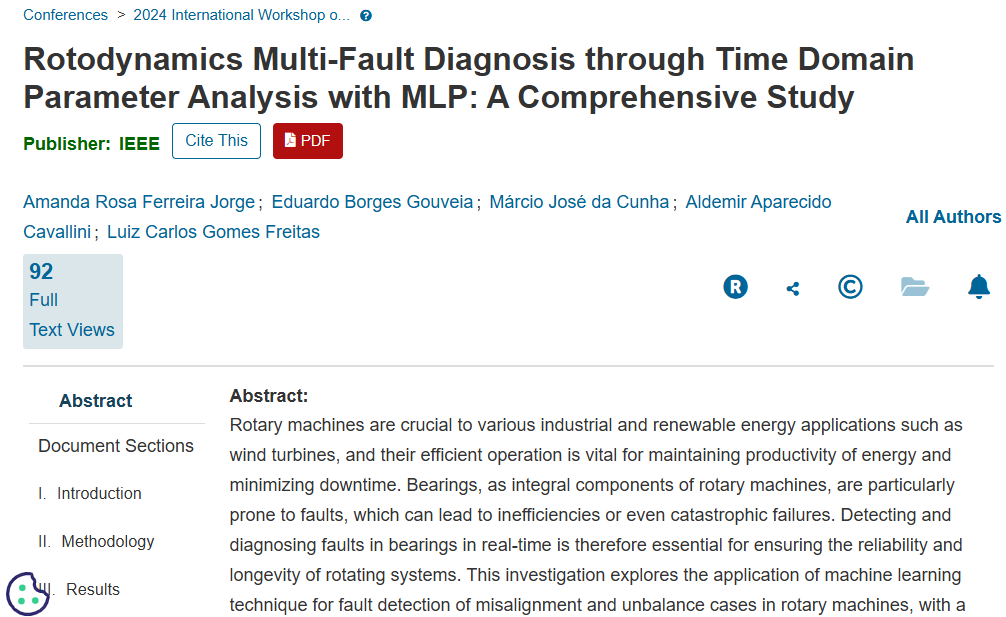
As part of my Ph.D. research, I investigated fault diagnosis in rotating machinery using time-domain vibration signal analysis. This work led to a publication at the International Workshop on Artificial Intelligence and Machine Learning for Energy Transformation (AIE 2024).
The article, titled Rotodynamics Multi-Fault Diagnosis through Time Domain Parameter Analysis with MLP: A Comprehensive Study , presents a comprehensive evaluation of time-domain features applied to MLP and SVM classifiers for multi-fault classification.
The study identifies key features that enhance fault detection accuracy and contributes to the development of intelligent monitoring systems for industrial machinery.
Facial Expression and Body Temperature Classification Using RGB Cameras
During my Master’s degree, the primary objective of my research was to develop automated and efficient models capable of capturing and classifying facial expressions and estimating body temperature in real time using RGB camera data. Facial expressions were classified based on Euclidean distances between key facial landmarks, enabling accurate emotion recognition without the need for depth sensors or infrared technology.
The models achieved average classification accuracies above 80% for facial emotion detection. In addition, body temperature estimation produced promising results, with a mean squared error (MSE) ranging from 0.15 to 0.20 ºC, demonstrating the system’s potential for non-invasive health monitoring applications.
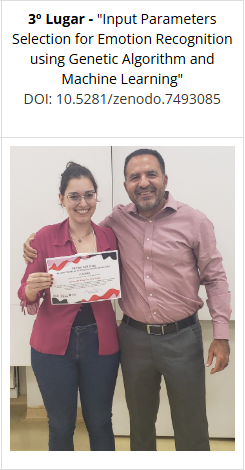
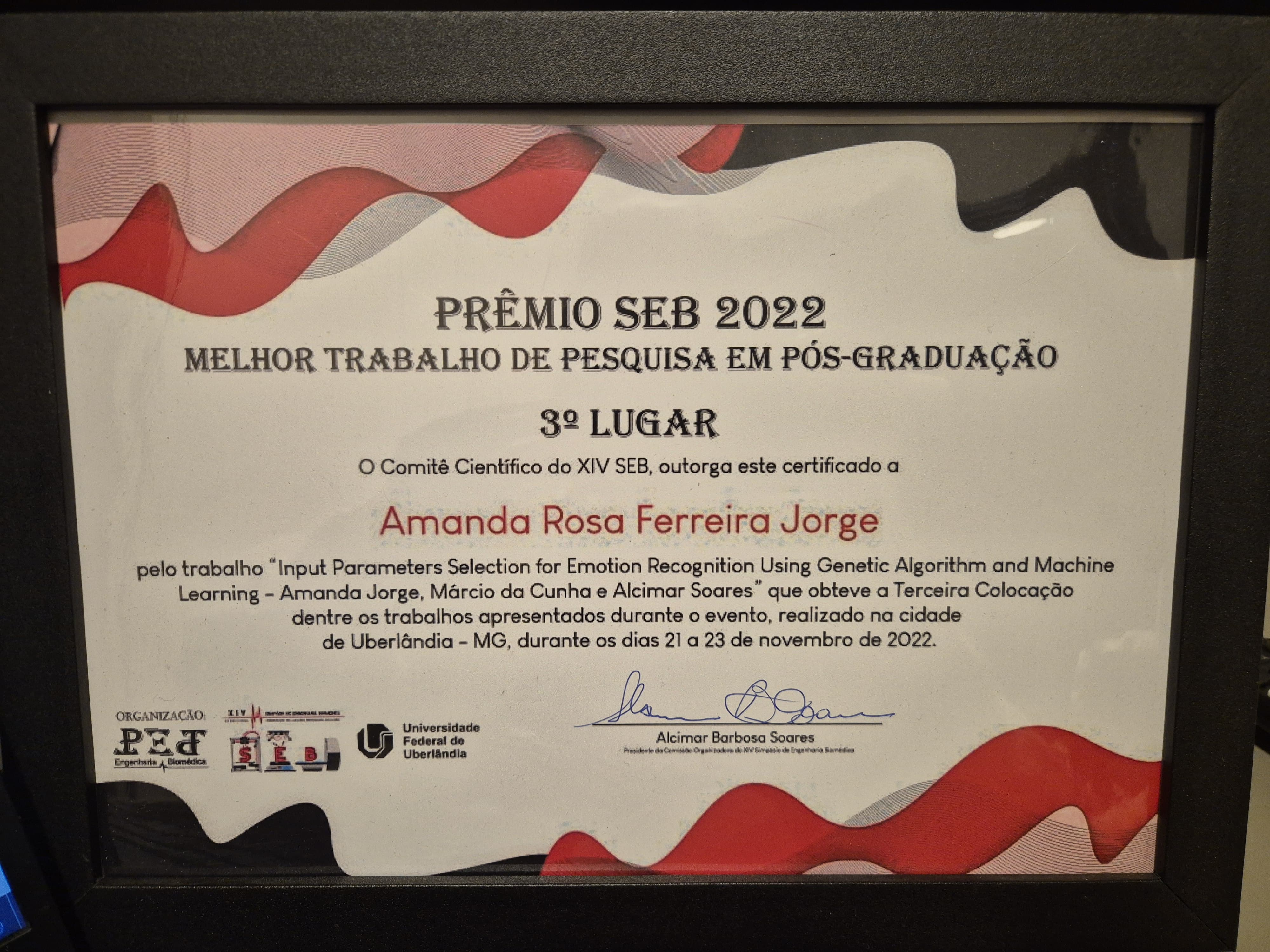
This research was recognized at the XIV SEB – Brazilian Symposium on Biomedical Engineering (2022), where I was awarded 3rd place for Best Graduate Research Paper.
👉 Event Link – XIV SEB 2022
.jpeg)
.jpeg)
.jpeg)
.jpeg)
Technical Presentation at Petrobras S.A. Headquarters
In March 2025, our team visited the headquarters of Petrobras S.A. in Rio de Janeiro to present the web application developed using Streamlit, designed to support the technical team in the rotor balancing process.
The system integrates advanced signal processing techniques with a scalable and efficient architecture. Computation and model execution are performed using Singularity containers in a clustered environment, ensuring reproducibility and portability.
The application is deployed using Docker and Kubernetes, with continuous integration and delivery managed by Jenkins CI/CD. We also integrated Grafana dashboards for real-time system monitoring and performance visualization.
The entire solution is developed in Python, following clean code principles and a modular design approach to ensure maintainability, scalability, and clarity.
.jpeg)
.jpeg)
Edge Computing using Raspberry for Lightweight Machine Learning Processing
As part of my Ph.D. qualification, I developed and validated an edge computing pipeline using a Raspberry Pi device for real-time fault diagnosis in rotating machinery. The system processes vibration signals extracted from accelerometers using time-domain, frequency-domain, and time–frequency-domain features.
The data transmission between devices was implemented using the MQTT messaging protocol. Locally, the processed features were stored in a lightweight SQLite database to ensure low-latency and offline resilience at the edge.
In the next phase of the project, a centralized dashboard will be developed for visualization and system monitoring. All data from the distributed edge devices will be consolidated into a central server using a PostgreSQL database, enabling global analysis, historical tracking, and integration with advanced analytics services.
Open Source Tool: RetinaFace
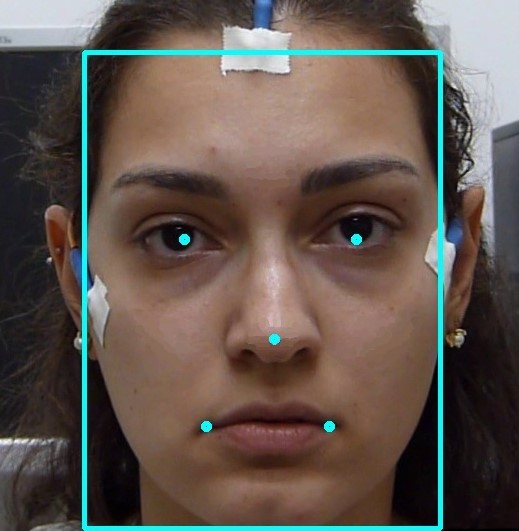
The RetinaFace tool provides precise detection of the facial region along with five key landmark points: the coordinates of the right and left eyes, the tip of the nose, and the corners of the mouth. This information is essential for tasks such as facial alignment, emotion recognition, and biometric analysis. By extracting these reference points accurately, RetinaFace enables a wide range of algorithmic applications in computer vision, particularly in face-based detection, classification, and real-time facial tracking.
Open Source Tool: DLib
The DLib library provides a highly accurate facial landmark detection system, returning 68 key points across various facial regions, including the eyebrows, eyes, nose, mouth, and jawline. These points are essential for understanding facial geometry and enable tasks such as facial expression analysis, head pose estimation, and feature tracking. A demonstration GIF is included where the tool is applied to my own face, showcasing the real-time adaptation of the landmarks as the face moves. This dynamic tracking highlights the robustness and precision of DLib, making it a powerful open-source tool for numerous computer vision applications involving facial recognition, emotion detection, and gesture analysis.

Web-Stock for UFU Laboratory
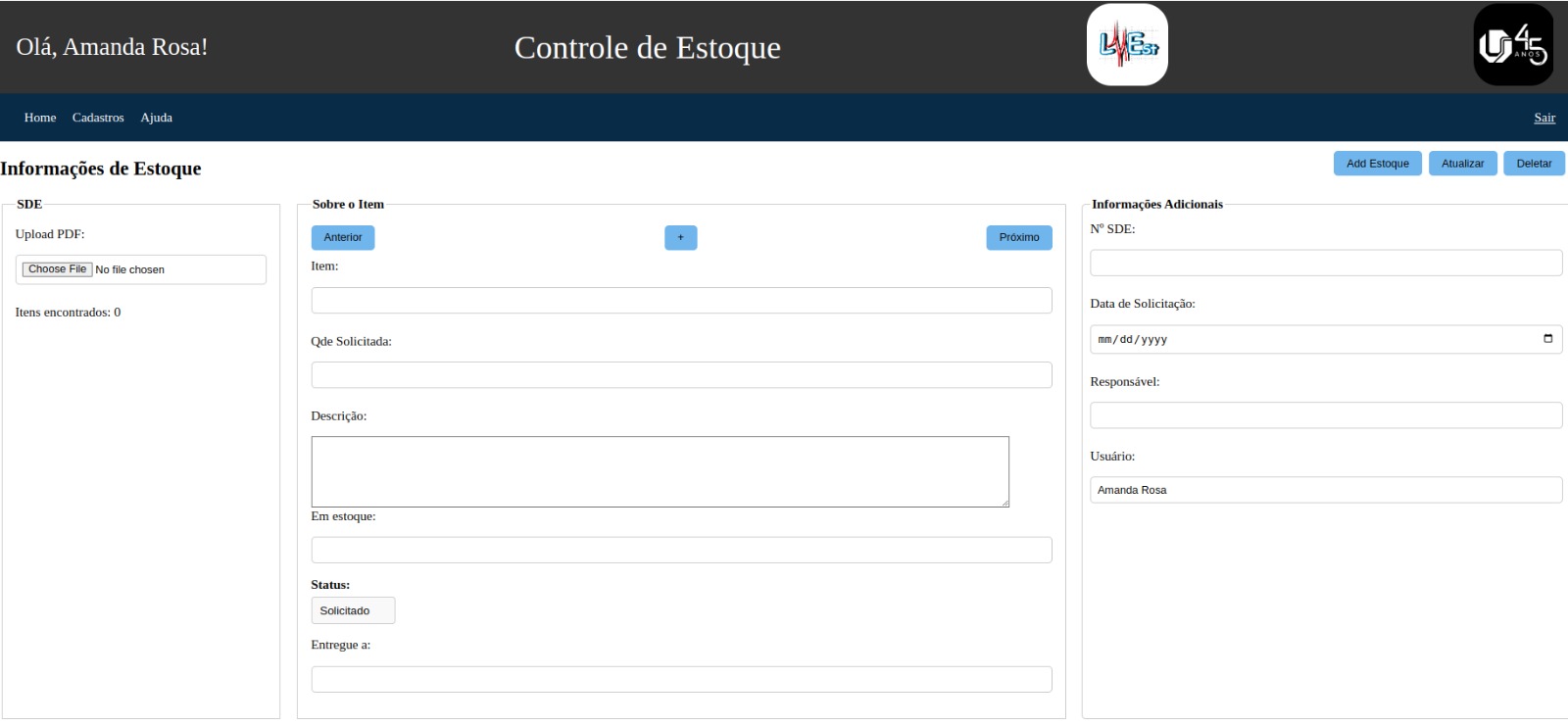
A WEB application was developed in JavaScript and HTML with PostgreSQL database to read PDF files and automatically insert information into the system, helping to automate processes and make data management more efficient. This system allows the extraction and insertion of relevant data from PDFs directly into the database, eliminating the need for manual data entry, reducing errors and saving time. This allows the organization to focus on other critical tasks while ensuring the accuracy and integrity of stored data.
Microservices for Vibration Monitoring Application - LMEst
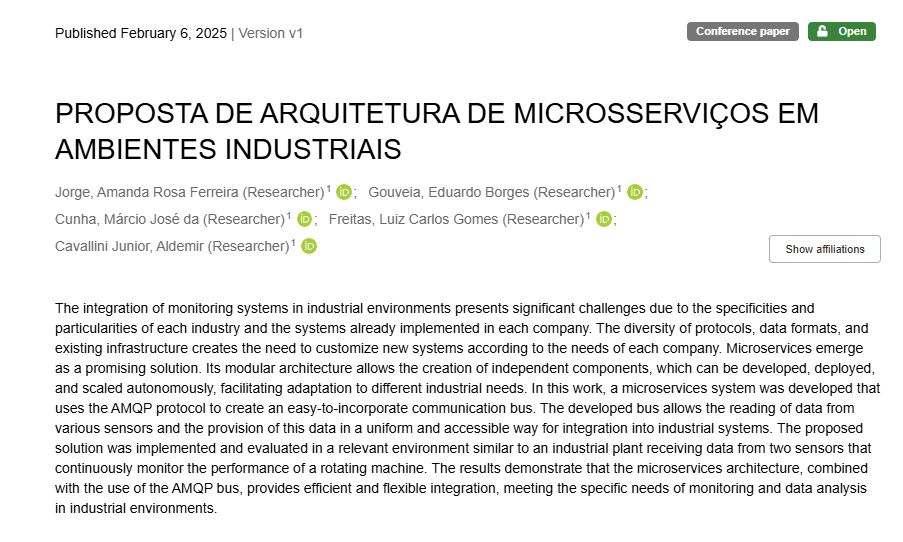
Integrating monitoring systems in industrial environments is challenging due to diverse protocols, data formats, and existing infrastructure. This requires customized solutions tailored to each company's needs.
Microservices offer a modular approach, enabling independent, scalable components that adapt to various industrial requirements. This work presents a microservices system using the AMQP protocol to create an easy-to-integrate communication bus.
The system reads data from multiple sensors and provides uniform, accessible data integration for industrial systems. It was implemented and tested in an industrial-like environment with two sensors monitoring a rotating machine's performance continuously.
Results show that the microservices architecture combined with the AMQP bus delivers efficient, flexible integration, addressing the specific needs for monitoring and data analysis in industrial settings.
For more details, visit Zenodo Repository .
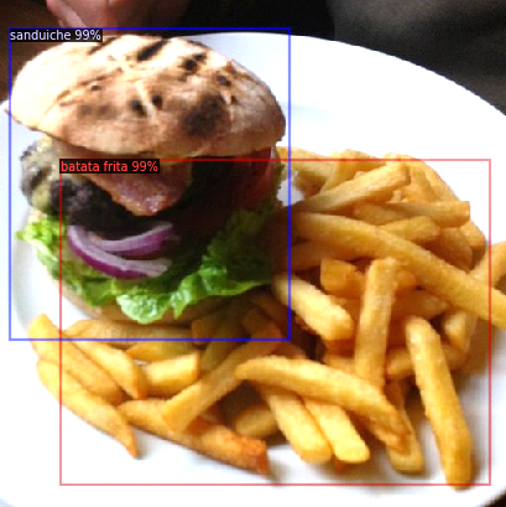
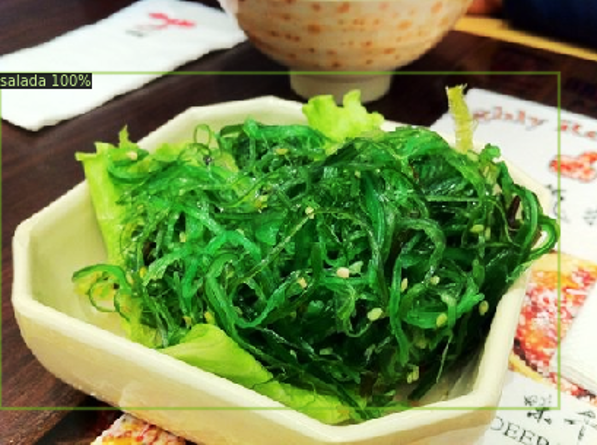
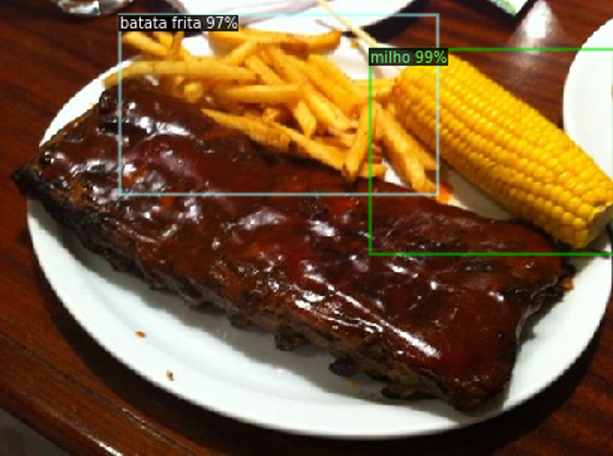
Personal Object Labeling and Detection
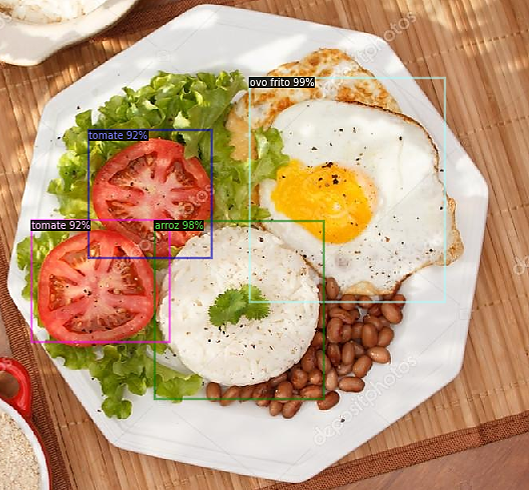
It is possible that, from Detectron2, reusing the CNN training in the coco-dataset, perform fine-tuning and obtain personalized object labeling and detection, which is fundamental for specific applications that require precision in identifying unique and distinct categories that are not present in generic datasets, thus allowing more adapted and efficient solutions for real problems in different sectors.
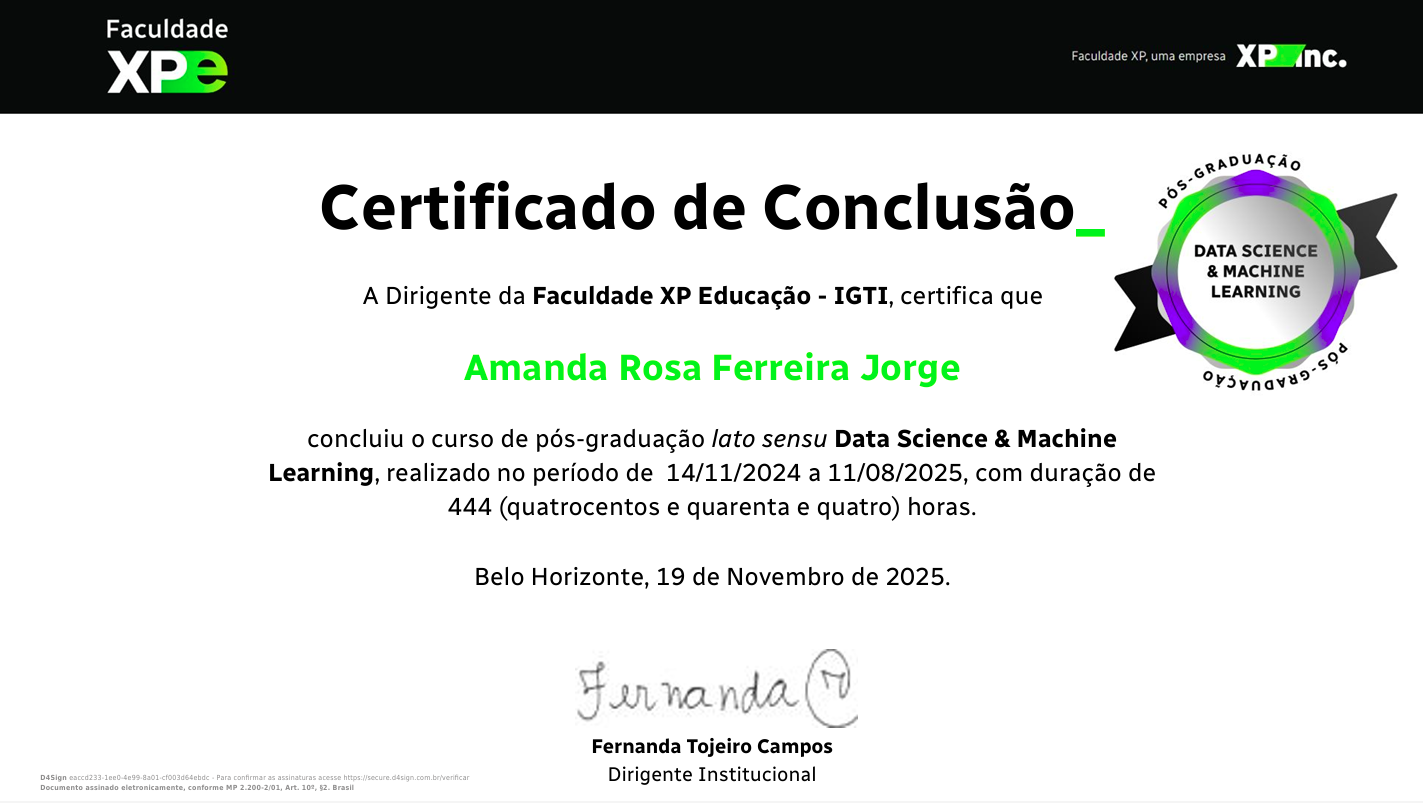
Data Science Specialization Project
Failure Prediction System for Rotating Machines Based on Engineering Data and Vibration Signals
This ongoing project is part of my specialization in Data Science at XP Educação (IGTI), and aims to develop a predictive maintenance system for rotating machinery using both engineering data and vibration signal features.
The project is based on the publicly available Kaggle Wind Turbine Signal Vibration Dataset , which contains vibration measurements from wind turbines under various operational conditions.
The pipeline involves data cleaning, feature extraction in the time and frequency domains, and machine learning model development using algorithms such as Random Forest, SVM, and Gradient Boosting. The models are evaluated based on precision, recall, and F1-score for fault prediction.
The goal is to build a scalable solution that can identify early signs of mechanical failure, helping reduce downtime and improve maintenance planning in industrial environments.

About Me
- 2025: Currently studying Software Architecture, Data Science & Cybersecurity at PUCPR (starting July 2025).
- 2025: Completed a Postgraduate Certificate in Data Science at XP Educação (July 2025).
- 2024: Completed a Postgraduate Certificate in Cloud Computing at XP Educação.
- 2023: Started Ph.D. in Electrical Engineering (focus on Computer Engineering) at the Federal University of Uberlândia (UFU).
- 2022: Earned a Postgraduate Certificate in Artificial Intelligence and Machine Learning from PUC Minas.
- 2020: Graduated with a B.Sc. in Biomedical Engineering from UFU.
- 2023: Completed an M.Sc. in Biomedical Engineering at UFU, focused on facial expression and temperature detection systems.
- Passionate about technology, I strive to stay up to date with the latest advancements in science and innovation.
- Participated in undergraduate research projects related to Neuroscience, Electroencephalography, Prosthetics, and Biological Signal Processing.
Technical Skills
Machine Learning & Data Science
Python
R Language
MATLAB
SQL & Databases (PostgreSQL, SQLite, MySQL)
APIs (RESTful & FastAPI/Flask)
Docker
Kubernetes
Jenkins (CI/CD)
JavaScript & Streamlit
Cloud – Microsoft Azure
Cloud – Amazon AWS
Vibration Signal Processing
Git & GitHub & Gitlab
Produções Principais / Main Production
Contact Me
amandarosafjorge@gmail.com